

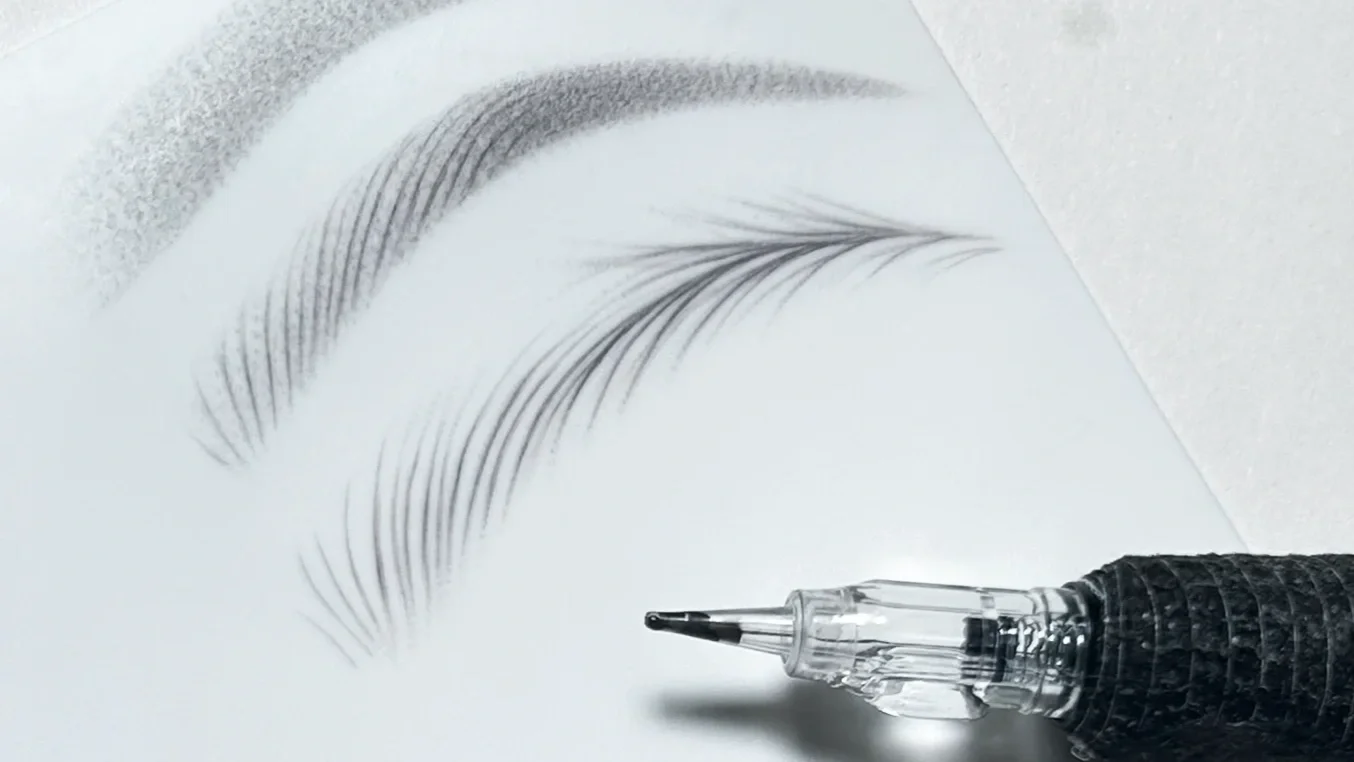
After building control on paper, the next step is fake skin.
This is where many artists expect their work to look identical right away and get frustrated when it doesn’t.
Fake skin is not paper.
But if you trained your hand correctly first, the transition becomes technical, not emotional.
Why Fake Skin Feels Hard at First
Paper gives instant feedback. Fake skin doesn’t.
On fake skin:
resistance is higher
pressure matters more
depth becomes visible
mistakes stay longer
That’s normal.
If paper practice taught you flow, spacing, and direction, fake skin teaches discipline and consistency.
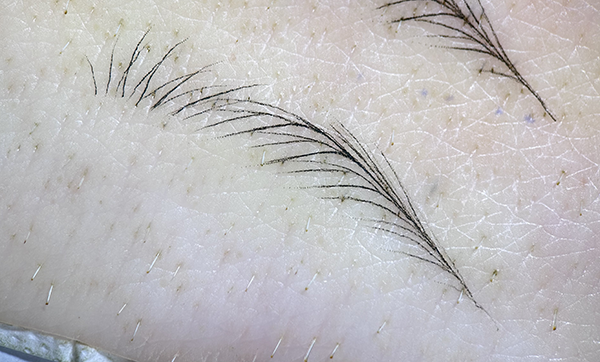
Early pig skin practice. Same stroke pattern, different surface.
What Transfers Directly From Paper
Paper practice transfers:
stroke direction awareness
rhythm and spacing
entry and exit control
visual balance of the brow
What does not transfer automatically:
pressure control
machine speed coordination
depth consistency
That’s why paper is a foundation, not the final step.
Common Mistake I See on Fake Skin
Many artists change their stroke style too soon.
They:
shorten strokes unnecessarily
hesitate mid-stroke
overwork one area
chase perfection instead of consistency
This usually comes from skipping paper or not trusting what was learned there.
Fake skin should refine your strokes, not reinvent them.
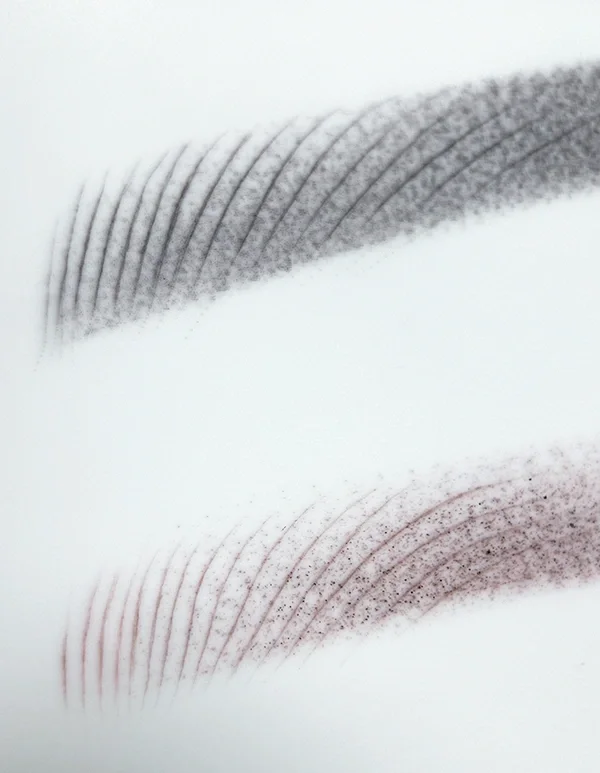
Consistent spacing and direction matter more than speed.
How I Recommend Practicing on Fake Skin
Keep this practical and calm.
My approach:
Draw the brow shape first
Map stroke direction visually
Work slowly, one section at a time
Focus on even pressure, not speed
Stop early instead of overworking
Fake skin rewards patience.
When You’re Ready to Move Forward
You don’t need perfect fake skin to move on.
You need control.
If your strokes are:
clean
intentional
evenly spaced
You’re building the right habits.
Machine work becomes easier when your hand already understands design.
Closing Thoughts
Paper builds understanding.
Fake skin builds discipline.
Skipping either step shows later.
Strong PMU work is never rushed. It’s layered.
Explore Face Chart Practice Resources for Brow Design & Hand Control →
Read More About PMU Practice & Training →